
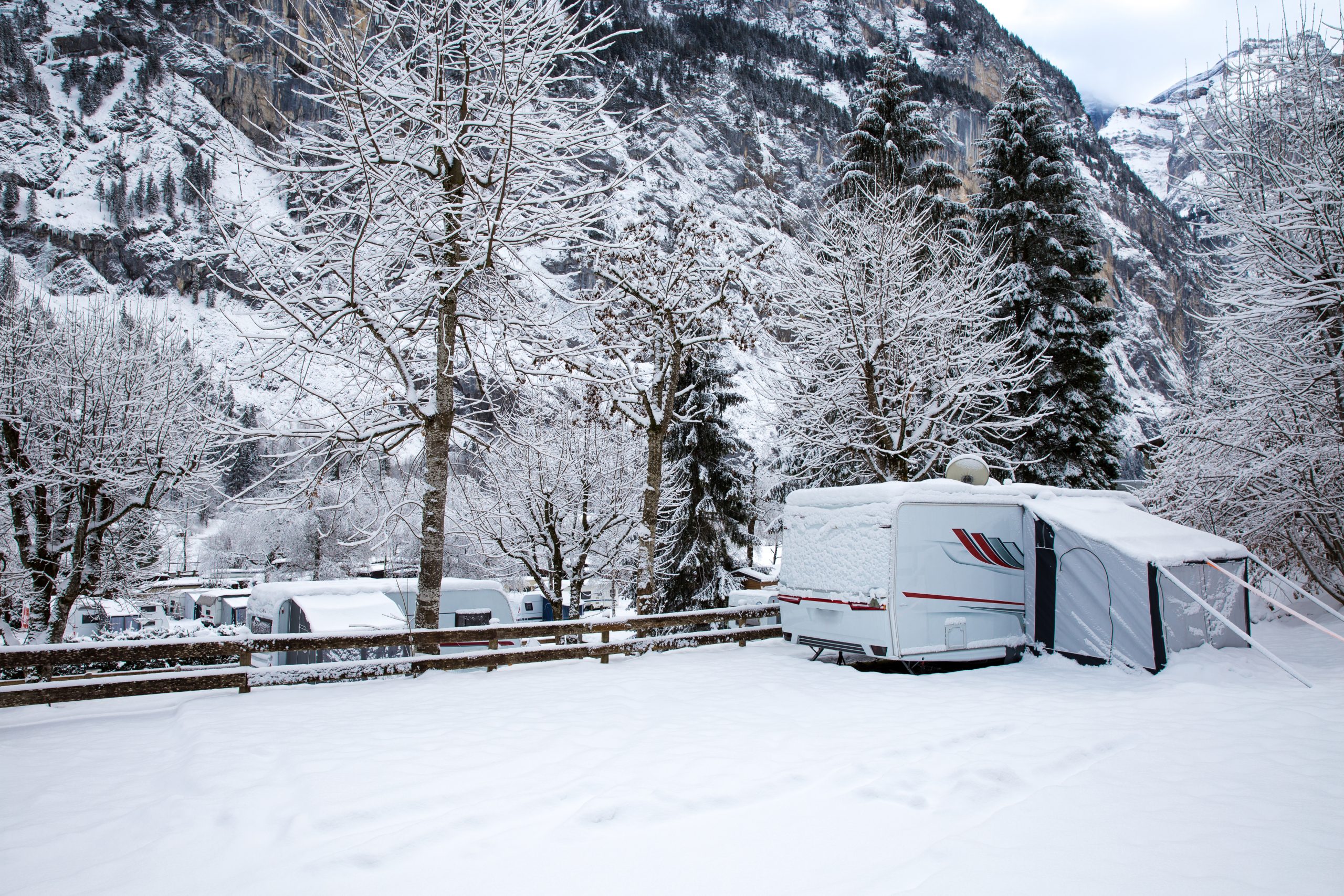
When the cold months roll in and travel slows down, many RV owners shift into storage mode. But even if your rig is parked, locked, and “sleeping” for the season, it still needs protection—especially during RV winter conditions. Storage brings its own set of risks, and without the right insurance in place, the off-season can quickly turn into an expensive surprise.
Why Storage Doesn’t Mean Zero Risk
It’s easy to assume that once an RV is tucked into a driveway, storage facility, or covered lot, nothing can happen to it. But winter is one of the most unpredictable times of the year, and long-term storage actually increases certain risks most RVers don’t think about.
Common winter storage hazards include:
- Freeze Damage: Even winterized plumbing systems can fail when temperatures drop unexpectedly.
- Rodents & Pests: Mice, squirrels, and other critters seek warmth, chewing wires and insulation.
- Falling Tree Limbs: Snow and ice accumulation weigh branches down, leading to sudden collapses.
- Roof Leaks: Seals can contract during extreme cold, allowing water intrusion when thawing begins.
- Theft & Vandalism: Unoccupied rigs are more vulnerable, especially when stored off-site.
- Fire Risk: Storage facilities and garages can experience electrical issues or nearby vehicle fires.
Storage offers protection from the road—but not from everything else. That’s why insurance matters long after the keys are out of the ignition.
What Good RV Winter Storage Coverage Should Include
1. Comprehensive Coverage
This is the backbone of off-season protection. Comprehensive coverage steps in for damage caused by:
- Weather events
- Fire
- Theft or break-ins
- Vandalism
- Rodent damage (depending on the policy)
- Falling debris
If your RV sits unattended for months, comprehensive protection makes sure surprises don’t turn into setbacks.
2. Personal Belongings Protection
Many owners store tools, outdoor gear, electronics, or décor inside their RV during the off-season. That’s convenient—but risky. Without the right personal belongings coverage, these items may not be protected if something happens to the rig during storage.
3. Liability Coverage (If Stored at Home)
If your RV is parked in your driveway, yard, or detached garage, you may need extra liability protection. Delivery drivers, contractors, or visitors slipping on ice near your parked rig could lead to unwanted claims.
4. Coverage for Aftermarket Upgrades
Solar panels, satellite systems, backup cameras, and upgraded batteries are valuable additions. Make sure they’re listed on your policy so you’re covered if winter damage or theft occurs.
5. Gap Coverage for Newer Rigs
If your RV is newer or financed, gap coverage ensures you’re not left paying the difference between what’s owed and what the rig is worth if it’s totaled while out of use.
Why Now is the Right Time to Review Your Coverage
Winter prep isn’t only about draining tanks and sealing windows—it’s about making sure your insurance protects the rig you depend on. With long periods of inactivity, unpredictable weather, and increased off-site storage risks, the RV winter season deserves just as much attention as your summer road-trip plans.
Whether your motorhome is in a heated warehouse, a covered storage lot, or sitting in your own driveway, the right policy gives you peace of mind until spring returns.
Even when your rig is out of sight, it should never be out of mind. Make sure you’re fully protected for the entire RV winter season. Reach out to Happy Camper Insurance today so we can review your coverage and keep your RV properly insured—no matter where it’s resting.