
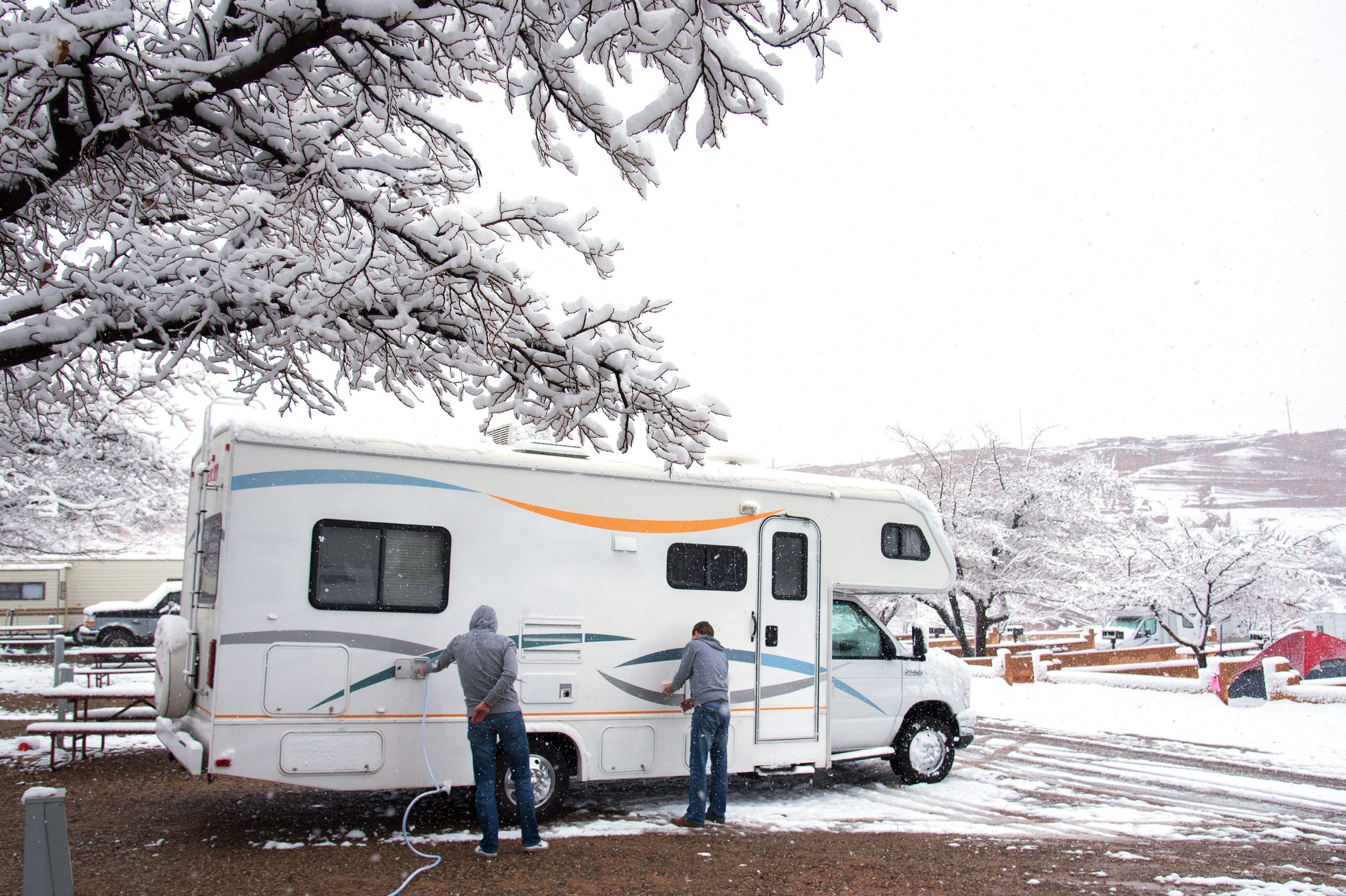
As temperatures start to fall, more RV owners are preparing for RV living in the winter—whether that means full-time travel, seasonal stays, or simply keeping your rig safe through long stretches of cold weather.
Winter brings its own set of challenges: frozen plumbing, battery failures, tire pressure drops, slick roads, heavy snow loads, and unexpected breakdowns. The right insurance strategy can make the difference between a smooth winter season and a costly surprise.
Below are the must-know insurance considerations every RV owner should review before the first freeze hits.
1. Make Sure Your Policy Covers Winter-Related Damage
Not all policies treat winter hazards the same way. Frozen plumbing, burst lines, roof damage from snow accumulation, and electrical failures can fall under different categories depending on your insurer.
Review your comprehensive coverage to ensure winter-specific issues—like collapsed awnings, cracked tanks, or ice-related water damage—are included. If you’re unsure, this is the perfect time to ask your agent for clarification before winter weather works against you.
- Don’t Skip Full Replacement or Agreed Value Coverage
Cold-weather incidents can cause significant, sometimes total, damage. If you store your RV in a snowy region or travel through freezing climates, consider upgrading to full replacement cost or agreed value coverage.
These policy types ensure you aren’t stuck with depreciated values if something major goes wrong. Winter storms are unpredictable—your policy shouldn’t be.
3. Add Roadside Assistance Before You’re Stranded in the Cold
Dead batteries and frozen fuel lines tend to strike when the temperature dips. A robust roadside assistance plan helps cover towing, jump-starts, tire changes, fuel delivery, lock-outs, and mobile mechanic help.
Not all RV roadside plans offer the same level of service, especially for larger rigs, so make sure you’ve selected an option designed specifically for motorhomes and towables.
4. Consider Storage Insurance if You’re Hibernating for the Season
If your RV will be parked until spring, storage insurance can reduce your premium while keeping your unit protected from winter threats. This type of coverage typically includes:
- Fire and smoke damage
- Theft or vandalism
- Falling tree limbs
- Water intrusion
- Snow and ice-related roof damage
It can also cover your personal belongings stored inside, depending on your policy. Just remember: driving or towing your RV with storage-only coverage is never allowed.
5. Review Liability Limits if You’re Traveling This Winter
Winter roads can be hazardous—slick highways, black ice, and unpredictable braking conditions increase the likelihood of accidents. That’s why RV owners traveling during the colder months should review their liability limits.
Higher coverage typically only adds a few dollars per month but can protect you significantly if you’re found at fault during a weather-related incident.
- Bundle Your RV, Auto, and Seasonal Toys
Snowmobiles, tow vehicles, and even small secondary trailers can often be bundled with your RV policy for better pricing and more consistent coverage across all your cold-weather equipment.
Bundling is a simple way to streamline your insurance and sometimes unlock multi-policy savings.
Final Thoughts: Stay Protected During RV Living in the Winter
Whether you’re storing your rig, snowbirding to warmer regions, or fully embracing RV living in the winter, preparing your insurance ahead of the first freeze is one of the smartest steps you can take. The right coverage keeps you warm, protected, and worry-free all season long.
If you’re not sure whether your policy is winter-ready, get in touch with the experts at Happy Camper Insurance. Our team can help you review your coverage, fill any gaps, and make sure you (and your RV) stay protected no matter how cold it gets.