
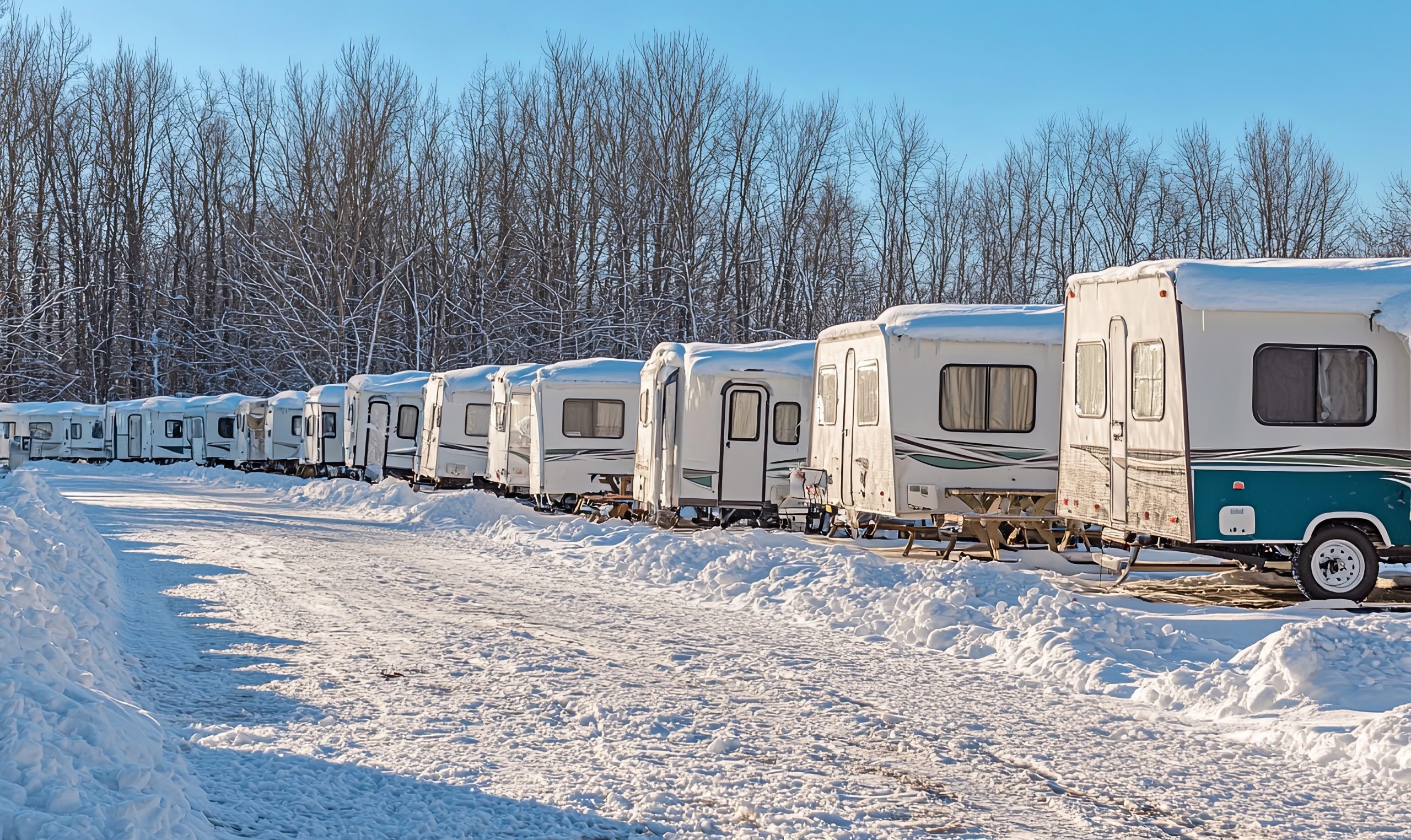
When temperatures start dropping and the season winds down, many owners assume parking their rig or boat in storage means the risks are gone. But RV Winter conditions don’t pause just because your vehicle is off the road. In fact, winter storage is one of the most overlooked—and underinsured—periods for RVs, boats, and seasonal toys.
From rodent damage to collapsing roofs, frozen lines to theft, the months you spend “out of use” may be the months when your coverage matters most.
Yet every winter, countless RV and boat owners discover too late that their policies don’t cover the exact situations winter storage brings. These gaps are avoidable, but only if you understand where they hide.
Mistake #1: Assuming Storage Automatically Lowers Risk
It seems logical: if the RV or boat isn’t being driven, sailed, or actively used, it must be safer.
Winter has other plans.
Stored vehicles face unique threats, including:
- Heavy snow causing roof damage or full collapse
- Ice expansion leading to cracked tanks or plumbing
- Rodent nesting or wire chewing
- Break-ins or theft at storage yards
- Moisture buildup and mold
Standard policies aren’t always structured to protect against these off-season risks—especially if you haven’t added storage-specific coverage.
Mistake #2: Thinking Comprehensive Coverage Includes Everything
Many owners think, “I have comprehensive, I’m good.”
But comprehensive can still exclude damages common in storage environments. Some policies limit or deny claims for:
- Pest-related damage
- Freeze damage
- Slow leaks that worsen over months
- Long-term weather exposure
- Improper winterization
If you store your vehicle in a region with real winter weather, your policy needs to specifically support those risks—not just the basics.
Mistake #3: Forgetting About Personal Belongings Inside
It’s easy to forget that many RVs and boats store far more than just the vehicle—electronics, outdoor gear, maintenance tools, fishing equipment, décor, and even clothing. During RV Winter months, these items are especially vulnerable to condensation, theft, or rodent intrusion.
Without personal property extensions or full-timer-style coverage, those belongings may not be included in a winter claim.
Mistake #4: Not Updating Coverage When Moving to Long-Term Storage
If you change from active travel to long-term winter storage, your insurance should change too.
Common oversights include:
- Not updating the storage address (which affects rating and risk level)
- Leaving collision coverage active while missing freeze protection
- Forgetting to add lay-up endorsements for boats
- Not adjusting coverage limits based on how the RV or boat is stored
Even a simple change—like switching from outdoor storage to an enclosed facility—should be noted in your policy so your coverage reflects the actual environment.
Mistake #5: Overlooking Trailer and Accessory Coverage
Many storage-related claims come from what’s attached to or stored with your RV or boat, such as:
- Trailers
- Hitch systems
- Batteries
- Solar panels
- Aftermarket accessories
- Marine electronics
Basic policies often treat these items separately, meaning they may require their own scheduled coverage.
RV Winter: Close the Storage Gap Before It Costs You
Winter shouldn’t be the season of costly surprises. If your RV or boat is heading into storage, your insurance needs to shift with it. The biggest RV Winter mistake owners make is assuming their standard policy already covers the season’s hidden risks.
Before the cold settles in, connect with Happy Camper Insurance for a full winter storage coverage review. Our team will ensure your RV, boat, and gear are protected well before winter tests your policy.