
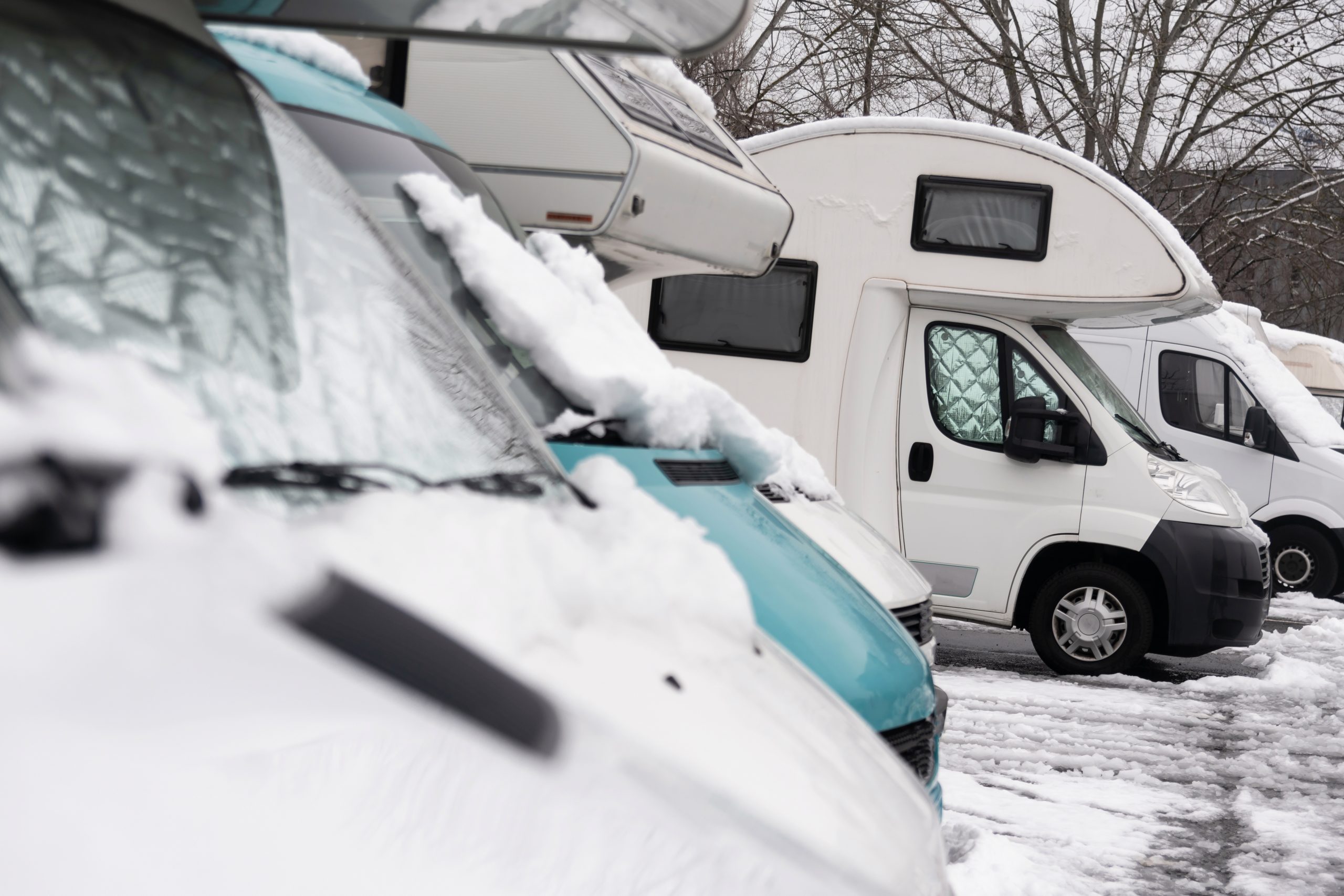
If you’re navigating cold weather RV living, you’re likely weighing where and how to store your RV when travel slows down. One of the most common questions owners ask is whether indoor storage and outdoor storage require different insurance coverage. The short answer is yes—because insurers evaluate risk based on exposure. Where your RV is kept during the winter can influence how your policy is structured, how claims are handled, and what protections matter most when your vehicle is parked for months.
Cold Weather RV Living: Why Storage Location Matters
Insurance isn’t just about what you own—it’s about the conditions that surround it. When your RV is actively being used, risk centers on driving, accidents, and road hazards. During winter storage, the risk profile shifts toward environmental damage, security, and long-term inactivity.
Underwriters assess storage environments because different locations expose your RV to different types of loss. Indoor storage reduces some risks but doesn’t eliminate them. Outdoor storage increases certain exposures but may still be perfectly insurable with the right coverage in place.
Indoor Storage: Lower Exposure, Not Zero Risk
Storing your RV in a garage, warehouse, or covered facility offers meaningful protection. It typically reduces exposure to:
- Snow accumulation and ice damage
- UV exposure and weather-related wear
- Falling branches and storm debris
However, indoor storage does not make your RV immune to loss. Fire, theft, water intrusion, and accidental damage can still occur inside a building. Rodents and electrical issues are also common in long-term storage environments.
From an insurance perspective, comprehensive coverage remains essential even when your RV is under a roof. Insurers may view indoor storage as lower risk, but they still expect coverage to protect against non-driving losses. If coverage is reduced too aggressively because the RV is “not in use,” owners may find themselves unprotected when something unexpected happens.
Outdoor Storage: More Exposure, Greater Need for Protection
Outdoor winter storage exposes your RV to the full range of seasonal hazards. Snow load, freezing temperatures, ice, wind, and moisture all increase the likelihood of claims. Common winter losses for outdoor-stored RVs include:
- Roof damage from heavy snow
- Cracked plumbing and tanks from freezing
- Water intrusion from melting ice or damaged seals
- Theft or vandalism in open lots or residential driveways
Insurance companies don’t prohibit outdoor storage, but they do factor it into risk assessments. Vehicles stored outside generally require strong comprehensive coverage and, in some cases, higher limits or additional endorsements depending on location and exposure.
What Policies Actually Care About
Contrary to popular belief, insurers don’t focus on whether your RV is moving—they focus on how likely it is to be damaged or cause damage. When evaluating winter storage, they typically consider:
- Location: Indoor facility, gated lot, private property, or street parking
- Security: Fencing, access control, lighting, and surveillance
- Climate: Regional weather severity and snowfall patterns
- Preparation: Whether the RV has been properly winterized
- Access: How often the vehicle is checked during storage
These factors influence underwriting decisions and claims outcomes. A properly winterized RV stored indoors in a secure facility represents a very different risk profile than one left outdoors without preparation in a high-snow area.
Do You Need Different Coverage?
In many cases, yes. While the core of your policy remains the same, how it is structured during the off-season should reflect your storage setup.
For indoor storage, you may be able to adjust certain on-road coverages while maintaining strong comprehensive protection. For outdoor storage, comprehensive coverage becomes even more critical, and liability may still matter depending on where the RV is kept and who has access to it.
What you should never assume is that you can suspend coverage altogether. Damage that occurs while uninsured is not retroactively covered, and gaps in coverage can create significant financial risk when you’re least expecting it.
Making Storage Work for You
Choosing indoor or outdoor storage is often a matter of availability, cost, and convenience. Regardless of where your RV is kept, insurance should be part of your winter readiness plan. That means:
- Confirming what coverages remain active during storage
- Making sure comprehensive protection is in place
- Notifying your insurer of where and how the RV is stored
- Performing periodic checks to catch issues early
The goal is not just to store your RV, but to protect it through months of inactivity.
Cold Weather RV Living: Protection for Every Season
For anyone managing cold weather RV living, understanding how storage impacts insurance is just as important as winterizing plumbing or protecting your battery. Indoor and outdoor storage come with different risks, and your policy should reflect the reality of where your RV spends the winter.
For cold weather RV living guidance and for all your RV, boat, and powersport insurance needs, contact Happy Camper Insurance today. We help owners choose coverage that fits how and where they use their vehicles, so you can move into every season with confidence.