
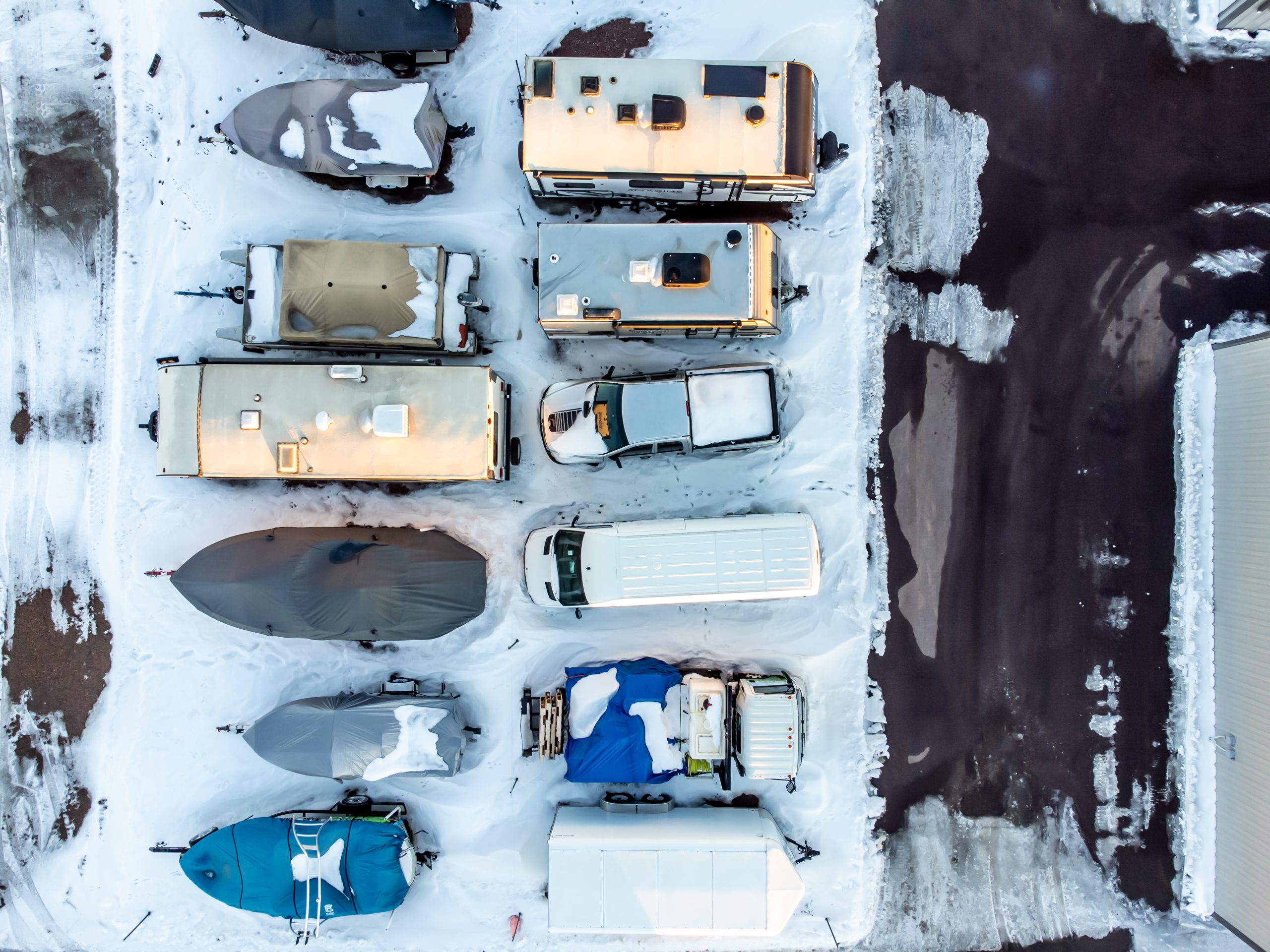
RV winter living tips usually focus on maintenance—draining water lines, protecting batteries, and preparing for months of cold weather or seasonal travel. But one of the most important winter decisions happens on paper, not in your driveway: your insurance coverage.
As how you use your RV changes with the season, many owners consider adjusting their policies to match. Sometimes that’s a smart move. Other times, it can create costly gaps that only become obvious when damage has already been done.
Why Seasonal Adjustments Are So Common
RV ownership is inherently seasonal. Many owners travel heavily in warmer months and slow down or stop altogether in winter. Because of that, it’s natural to assume your insurance should change too. You might think, “If I’m not driving, why keep the same coverage?”
Insurance companies do allow certain seasonal adjustments, but they evaluate risk differently than most owners expect. It’s not just about whether your RV is moving. It’s about what can happen to it while it exists—whether it’s on the road, in storage, or parked at a seasonal site.
When It Makes Sense to Change Coverage
There are situations where adjusting your policy for the winter is both reasonable and smart.
Reducing liability when you’re not driving:
If your RV is parked for the season and not being operated on public roads, you may be able to reduce or modify certain liability components. This can lower costs without increasing exposure, as long as the vehicle truly isn’t being driven.
Updating usage details:
If you shift from full-time travel to long-term storage, or from northern storage to seasonal relocation, your insurer should know. Keeping your usage and location information accurate ensures your policy reflects your real risk.
Tailoring coverage for storage conditions:
If you move from outdoor storage to a secure indoor facility, your risk profile may improve. In some cases, this can allow for coverage adjustments based on lower exposure to weather or theft.
These changes are about aligning your policy with how your RV is actually being used.
When It Does Not Make Sense to Reduce Coverage
Just as important is knowing when not to make changes.
Dropping comprehensive coverage:
Comprehensive protection is what covers non-driving losses such as theft, vandalism, fire, falling objects, storm damage, and animal intrusion. Winter is when many of these claims occur. Removing comprehensive coverage during the off-season is one of the most common and costly mistakes RV owners make.
Letting coverage lapse entirely:
Some owners assume that if their RV is parked, they can cancel insurance and restart it later. Damage that occurs while uninsured is not retroactively covered. Even worse, frequent lapses can affect your insurability and lead to higher premiums when you return to the road.
Ignoring liability exposure:
Even a parked RV can present liability risks. A visitor slipping near your stored vehicle, a storm causing your RV to damage nearby property, or equipment shifting and causing injury can all create financial exposure. Depending on where and how your RV is stored, liability may still be relevant.
RV Winter Living Tips: What Insurers Actually Care About
Insurance isn’t built around seasons—it’s built around risk. When evaluating seasonal adjustments, insurers look at:
- Location: Where your RV is stored or used during the winter
- Security: Indoor vs. outdoor storage, access control, and visibility
- Climate: Regional weather severity and storm patterns
- Preparation: Whether your RV has been properly winterized
- Access: How often the vehicle is checked or maintained during storage
These factors determine the likelihood of a claim. A properly winterized RV stored indoors in a secure facility presents very different risks than one left outdoors in a high-snow area without preparation.
Common Pitfalls to Avoid
Across all types of owners—seasonal travelers, snowbirds, and full-timers—insurers see the same missteps:
- Assuming “not driving” equals “not at risk”
- Reducing coverage without understanding what is still needed
- Forgetting to notify the insurer about storage location or travel changes
- Prioritizing short-term savings over long-term protection
These choices often result in denied claims or unexpected repair bills months later.
How to Make Smart Seasonal Adjustments
The goal of a seasonal policy review is not to strip away protection, but to ensure your coverage matches your real-world usage. Smart steps include:
- Reviewing your policy before winter arrives
- Confirming comprehensive protection remains in place
- Adjusting liability only if your RV truly won’t be operated
- Communicating storage locations or travel plans with your insurer
With the right adjustments, you can control costs without creating dangerous gaps.
RV Winter Living Tips: Coverage That Follows You Through the Seasons
If you’re collecting RV winter living tips, don’t stop at maintenance and storage checklists. Insurance is just as important as antifreeze and battery care. Seasonal adjustments can be helpful when done correctly—but cutting the wrong coverage can turn a quiet winter into an expensive spring.
For RV winter living tips and for all your RV, boat, and powersport insurance needs, contact Happy Camper Insurance today. We help owners tailor coverage for every season of use, so whether you’re traveling, storing, or planning your next adventure, you can protect what matters most with confidence.