
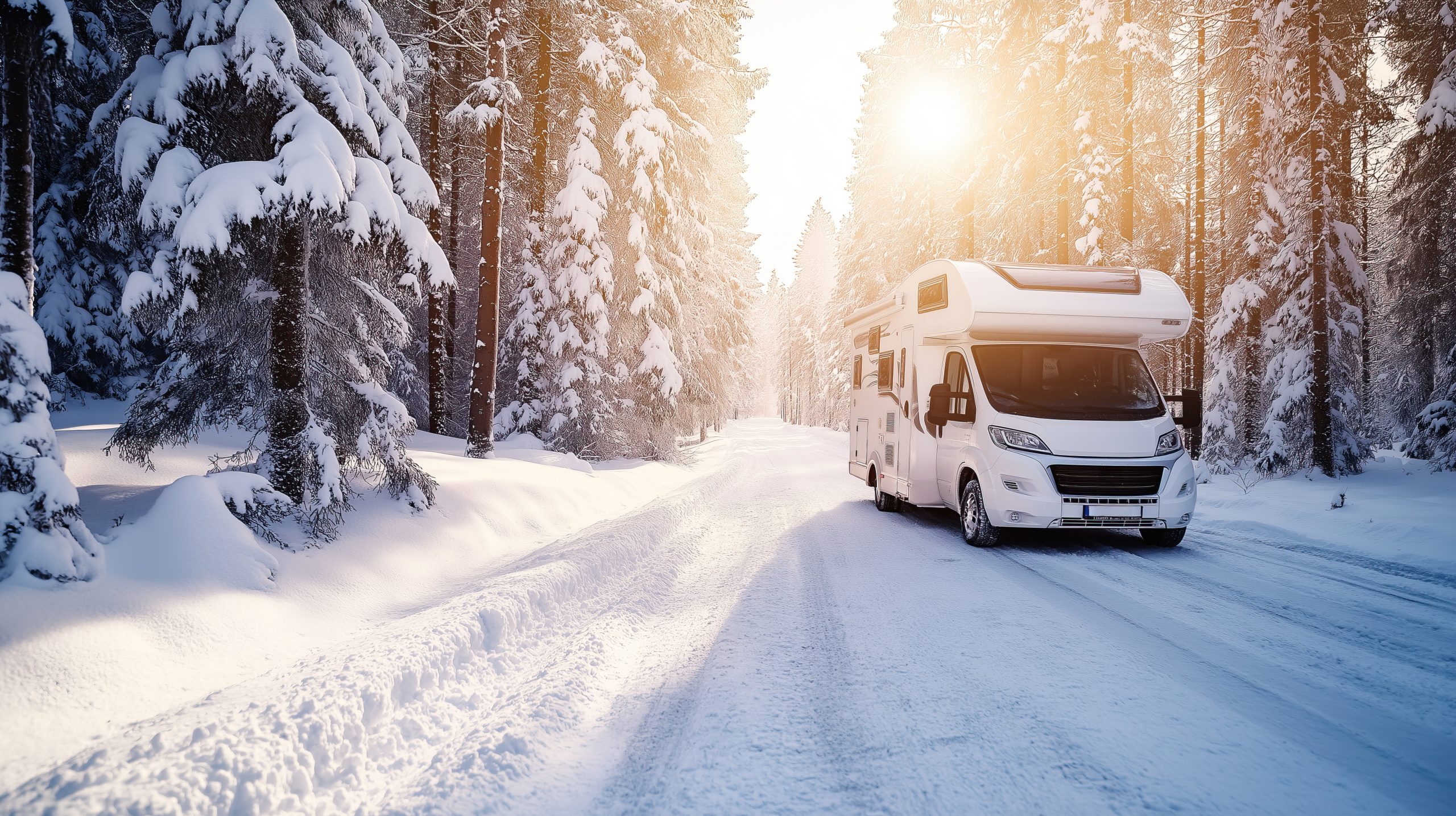
For adventurous travelers, RV living in the winter offers a quieter, slower-paced way to explore—fewer crowds, peaceful snow-covered landscapes, and the freedom to roam beyond peak season. But winter travel also introduces a unique set of risks that don’t exist during warmer months. From frozen campsites to icy highways, winter conditions demand more preparation, more awareness, and the right insurance coverage to avoid costly surprises.
The Reality of Winter RV Travel
Winter transforms familiar campgrounds and roadways into entirely different environments. Campsites may be partially closed, water hookups shut off, or services limited. Roads that are manageable in summer can become hazardous with little warning once temperatures drop.
Insurance claims tend to spike in winter for a reason. Even well-maintained RVs are pushed harder by freezing temperatures, snow accumulation, and reduced traction. For many travelers, the biggest issues aren’t dramatic storms—but everyday winter conditions that quietly cause damage over time.
Common Risks Winter RV Travelers Face
- Frozen infrastructure at campsites
Many campgrounds aren’t designed for extended winter use. Frozen spigots, uneven icy pads, and limited electrical capacity can create challenges that lead to plumbing damage, power failures, or accidents. - Icy and unpredictable roads
Ice-covered highways and mountain passes increase the risk of collisions, slide-offs, and jackknifing—especially for heavier rigs. Even short trips can turn risky when weather changes faster than expected. - Mechanical and system strain
Cold weather affects everything from engine performance to slide-out mechanisms. Frozen seals, brittle hoses, and weakened batteries are among the most common causes of winter breakdowns. - Snow and ice buildup
Snow accumulation on roofs, awnings, and slide-outs adds weight and stress. As snow melts and refreezes, it can lead to leaks, seal damage, or structural issues that aren’t immediately visible.
Why Insurance Matters More in Winter
One of the biggest mistakes winter travelers make is assuming their standard RV policy covers every cold-weather scenario. In reality, coverage can vary widely when it comes to:
- Weather-related damage
- Emergency towing or roadside assistance in remote areas
- Temporary housing if your RV becomes uninhabitable
- Damage occurring while parked or stored during winter
Without the right endorsements or policy structure, winter incidents can lead to significant out-of-pocket costs.
How to Reduce Risk While RV Living in the Winter
Preparation is your best defense. Here are smart ways to lower your risk while traveling in colder months:
Plan routes carefully.
Avoid unnecessary mountain passes and monitor weather forecasts daily. Flexibility is key in winter travel.
Protect critical systems.
Use heated hoses, insulation, and tank heaters to protect plumbing and prevent freezing.
Slow down—on the road and in campgrounds.
Reduced speeds help prevent accidents on ice and snow, both while driving and maneuvering at campsites.
Inspect often.
Regularly check your roof, seals, tires, and undercarriage for snow, ice, or damage.
Review your insurance before winter hits.
This is one of the most overlooked steps—and one of the most important.
RV Living in the Winter: Travel Smarter, Not Colder
At Happy Camper Insurance, we understand the realities of RV living in the winter because we see the claims patterns every year. Whether you’re traveling full-time, taking seasonal trips, or parking your RV until spring, having the right coverage ensures winter doesn’t derail your plans—or your finances.
Before you head out onto frozen campsites and ice-covered roads, take time to review your policy. Contact Happy Camper Insurance today to speak with an RV insurance specialist who can help you stay protected, prepared, and confident—no matter how cold the journey gets.