
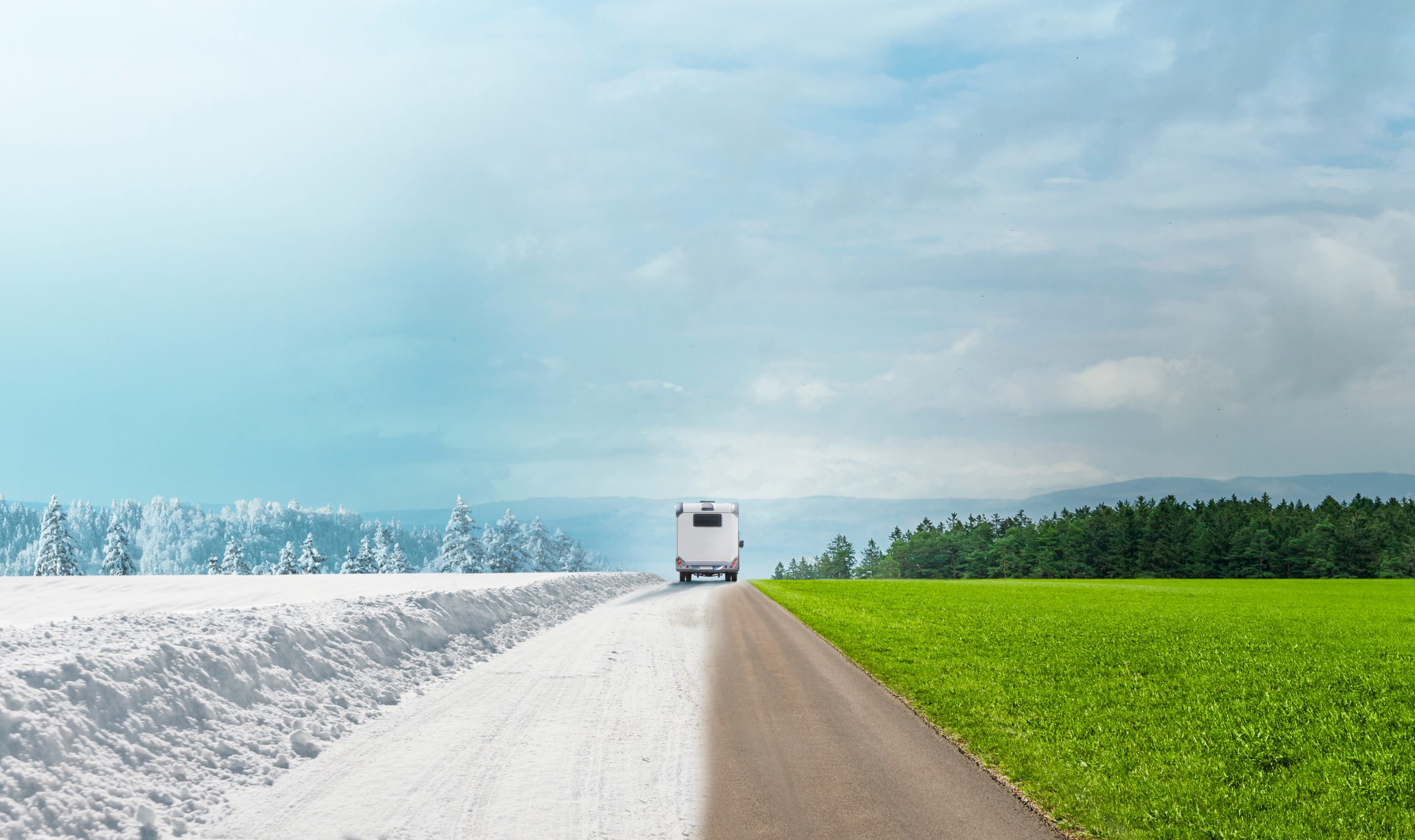
When RV winter arrives, not every owner faces the same risks. Some head south in search of sunshine, while others stay put and prepare for months of snow, ice, and freezing temperatures.
From an insurance perspective, geography plays a major role in how risk is assessed, how policies are structured, and what types of claims are most likely to occur.
Whether you migrate as a snowbird or remain in colder climates, understanding how location impacts your coverage can help you avoid costly surprises.
Two RV Winter Lifestyles, Two Risk Profiles
At a high level, RV owners fall into two broad winter categories:
- Snowbirds, who relocate seasonally to warmer regions and continue using their RVs during the winter months.
- Northern owners, who store their RVs for extended periods due to weather conditions.
Both groups face winter-related risks, but they look very different. Snowbirds may escape freezing temperatures, but increased travel and unfamiliar roads introduce other exposures. Northern owners avoid driving hazards but face higher risk from environmental damage, theft, and long-term storage issues.
Insurance companies recognize these differences. Your location during the winter influences underwriting, coverage recommendations, and the types of claims insurers see most often.
What Snowbirds Need to Consider
For snowbirds, winter is often an active season. Long-distance travel, changing weather patterns, and extended stays in unfamiliar areas increase exposure to:
- Road accidents and traffic-related claims
- Wind and storm damage in coastal or desert regions
- Theft or vandalism in temporary campgrounds or storage areas
- Liability risks in parks, shared facilities, or long-term stays
Because the RV remains in use, liability and collision coverage continue to be essential. Comprehensive coverage also remains important, especially in areas prone to severe storms or flooding.
Another factor insurers evaluate is where the RV is registered versus where it is primarily used during the winter. Extended stays in another state can affect how risk is rated, making it important to keep your insurer informed about seasonal travel patterns.
What Northern Owners Face
For owners who remain in colder climates, winter often means parking the RV for months at a time. While this reduces driving exposure, it introduces a different set of risks, including:
- Frozen plumbing lines and cracked tanks
- Roof damage from heavy snow or ice buildup
- Water intrusion from melting snow or damaged seals
- Rodent infestations in wiring and insulation
- Theft or vandalism in unattended storage locations
Most winter claims in northern regions fall under comprehensive coverage rather than collision. If coverage is reduced too aggressively during the off-season, owners may discover too late that common winter losses are not fully protected.
Storage location matters as well. An RV stored indoors in a secure facility typically presents lower risk than one kept outdoors in an open lot or residential driveway. Insurers factor climate severity, snowfall, and storage conditions into underwriting decisions.
How Geography Shapes Coverage Needs
Insurance is designed around probability of loss. Geography directly affects that probability. Snowbirds are more likely to experience driving-related claims and storm exposure, while northern owners see higher rates of environmental damage and long-term storage losses.
This means that the same policy structure may not work equally well for both groups. For snowbirds, maintaining strong liability, collision, and comprehensive coverage is critical. For northern owners, comprehensive protection becomes the backbone of the policy during the winter months, with liability adjusted based on whether the RV is being operated or stored.
What geography does not change is the need for continuous protection. Damage that occurs while uninsured is not retroactively covered, and gaps in coverage can create major financial risk regardless of location.
Common Mistakes Owners Make
Across both groups, insurers often see the same misconceptions:
- Assuming “not driving” means “not at risk”
- Reducing coverage without understanding what is still needed
- Failing to notify insurers of seasonal travel or storage locations
- Overlooking liability exposure while the RV is parked
These mistakes can lead to denied or reduced claims, higher out-of-pocket costs, and challenges when renewing coverage in the future.
Matching Your Policy to Your Winter Reality
Whether you travel south or stay north, your insurance should reflect how and where your RV is actually used. That includes:
- Reviewing coverage before the season changes
- Confirming comprehensive protection is in place
- Adjusting liability based on use and storage
- Communicating travel plans or storage locations with your insurer
The goal is not just to have insurance, but to have the right insurance for your winter lifestyle.
RV Winters: Protection Wherever You Spend the Season
No matter which side of the map you fall on, RV winter brings unique challenges. Snowbirds and northern owners face different risks, but both need coverage that accounts for geography, usage, and seasonal exposure.
For RV winter protection and for all your RV, boat, and powersport insurance needs, contact Happy Camper Insurance today. We help owners across every climate choose coverage that fits their real-world travel and storage habits, so you can move through every season with confidence.