
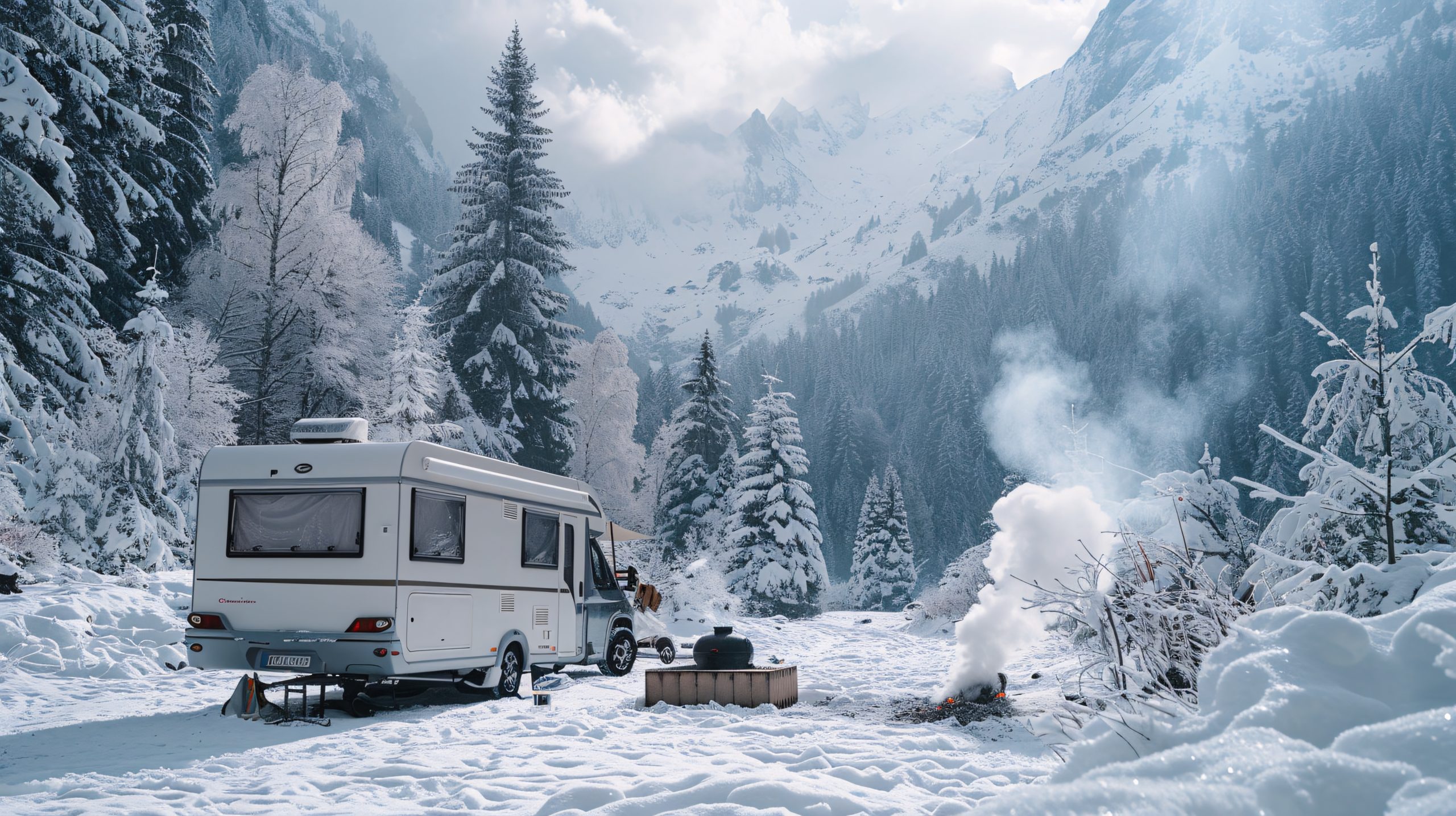
When temperatures drop, the challenges of RV winter travel start to show up fast. Frozen plumbing lines, dead batteries, icy roads, cracked seals — winter exposes weaknesses in your rig that you may never notice during warmer seasons.
And while snowy landscapes and peaceful winter campgrounds are undeniably beautiful, they also come with an increased risk of insurance claims. The good news? Most cold-weather issues are preventable with the right preparation.
Below, Happy Camper Insurance breaks down the most common winter RV claims — and the simple steps you can take to avoid them.
1. Frozen or Burst Plumbing Lines
This is the number one cold-weather claim, and it’s no surprise. Water expands when it freezes, and RV plumbing isn’t built to handle that pressure. Just one frozen elbow or burst fitting can lead to:
- Water damage
- Mold
- Ruined flooring
- Costly repairs
How to avoid it:
- Fully winterize your plumbing if storing your RV
- Add RV-safe antifreeze throughout the system
- Heat-tape exposed pipes
- Use a heated freshwater hose
- Keep interior temperatures above freezing
A few preventative steps save thousands in repairs.
2. Dead Batteries
Winter temperatures drain battery capacity significantly, which often leads to “no start” situations or entire 12V systems shutting down.
How to avoid it:
- Keep batteries fully charged
- Disconnect batteries when storing
- Use insulating wraps or thermal covers
- Consider lithium batteries if you winter camp often
A healthy battery is your RV’s lifeline in winter.
- Roof Leaks and Cracked Seals
Cold weather causes caulking and seals to contract, leading to small cracks that quickly turn into water leaks. Winter storms and melting snow only make matters worse.
How to avoid it:
- Inspect all roof seams and windows before winter
- Re-caulk where needed
- Use a breathable RV cover
- Keep the roof clear of snow buildup
A dry roof = a healthy RV.
4. Slide-Out Damage
Slide-outs can freeze, jam, or tear seals during winter use. This often leads to alignment issues, structural damage, and even motor burnout.
How to avoid it:
- Lubricate slide mechanisms
- Keep seals treated and flexible
- Check for ice before operating
- Avoid extending slides in heavy snow
Sometimes the safest decision is keeping slides in until weather stabilizes.
5. Tire Damage From Cold or Storage
Cold temperatures reduce tire pressure, and long-term storage can cause flat-spotting or cracking.
How to avoid it:
- Inflate to proper PSI
- Use RV tire covers
- Park on boards or pads, not bare pavement
- Move the RV occasionally to prevent flat spots
Your tires carry the entire weight of your rig — treat them carefully.
6. Rodent or Pest Damage
Winter is prime time for critters seeking warmth. They chew wiring, build nests, and ruin insulation.
How to avoid it:
- Remove all food before storage
- Seal openings with steel wool
- Use natural repellents or traps
- Keep the RV clean and dry
Small intruders can cause major headaches.
7. Ice- or Snow-Related Collisions
Winter road conditions are unpredictable, especially for heavy RVs. Claims spike in icy weather.
How to avoid it:
- Drive slowly and increase following distance
- Avoid travel during storms
- Use snow-rated or all-season tires
- Carry traction boards or chains (where legal)
Sometimes the safest choice is delaying the trip by a day.
Final Thoughts: Protecting Yourself During RV Winter Travel
Many RV winter claims have the same root cause: cold temperatures meeting unprepared systems. With a few preventative steps, you can dramatically reduce breakdowns, water damage, and weather-related headaches — and enjoy a much smoother winter travel season.
For the ultimate peace of mind, Happy Camper Insurance is here to help you protect your rig against the unexpected. Visit our website, explore your coverage options, and get in touch to safeguard your RV adventures all winter long and in every season ahead.